
Fantasia No. 3
For solo piano
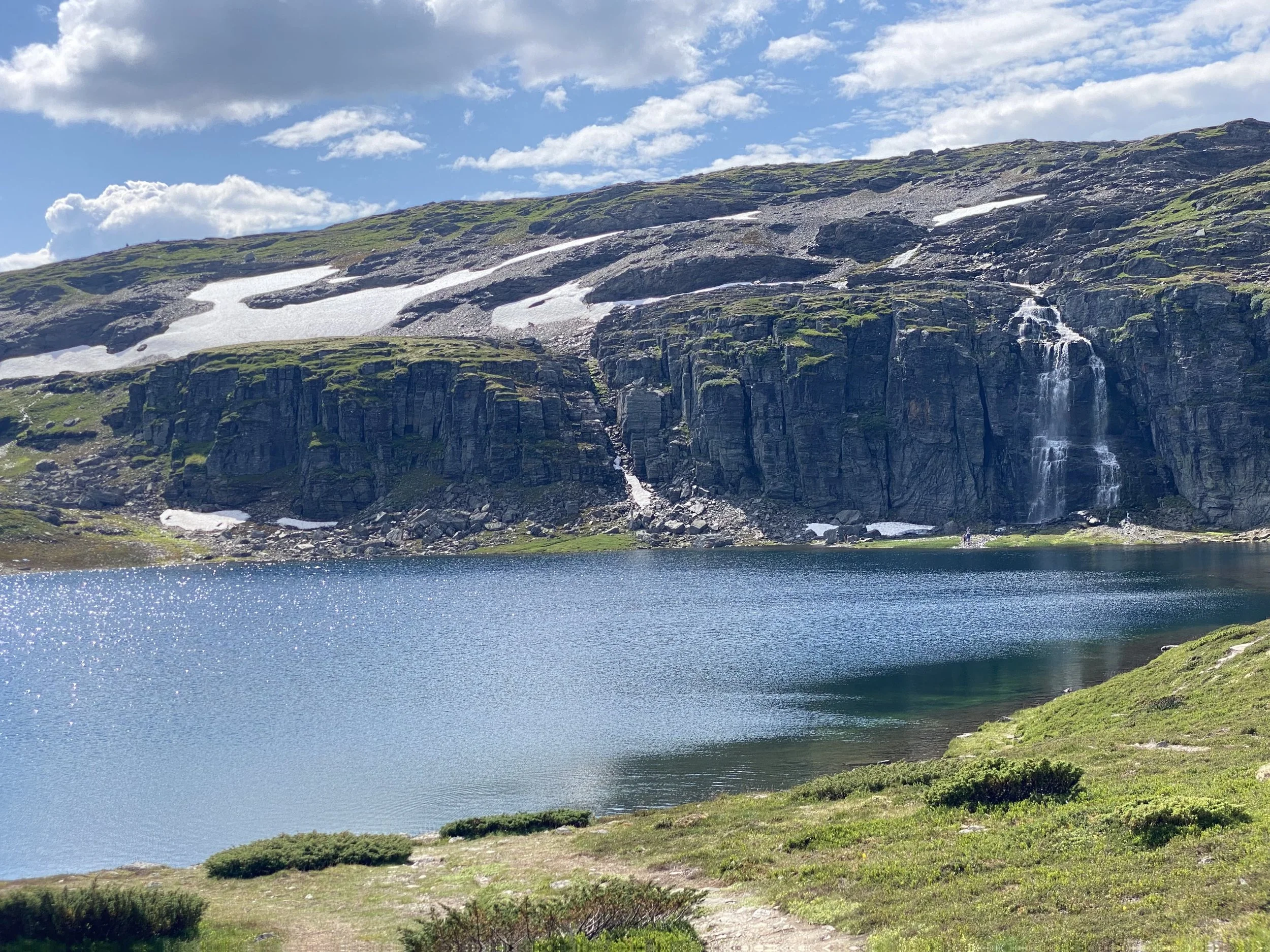
Fantasia No. 3 is a single-movement work for solo piano that uses the form of a fantasia to express a wide range of emotions. The piece opens with three main ideas: tranquil, sidestepping broken triads, furious, pesante block chords, and a bright fanfare in C major. The motif of the sidestepping triads was inspired by a family trip to the mountaintops of Norway: the journey of a water droplet from the highest peaks down to the ocean below inspired the descending motion of the rippling triads. The furious block chords, however, were inspired by a completely different set of mountaintops: the barren desert peaks surrounding the Anza-Borrego desert outside my hometown of San Diego. Unlike the calm opening motif, the motif rises in intensity, gathering force, dissonance, and tension until it reaches a climax on a fanfare. To resolve the dissonance and uncertainty of the second theme, a pedal point in C major grounds the triumphant chords in place. The melody is enhanced by powerful, planing perfect fourths, rising until it sinks back into calm. From there, the piece enters a dreamlike development section, where soft dynamics, arpeggiated chords, and extended harmony create the feeling of wandering. At first, the passage’s tone is cheerful: an ascending theme in C major softly rises into the stratosphere in large skips, sinks into a recapitulation in F# major, rises back up on an augmented chord arpeggio, and then sinks back down to C major in descending half steps. Later on, however, the dreamlike section becomes sinister when the opening motif descends to the lowest note on the piano and brings murky dissonance on a Petrushka chord. The final descent of the dreamlike section takes place when the opening motif descends toward the abyss in planing half steps. The wandering feeling ends when rumbling tremolos in the lowest notes on the piano create an energetic pulse that carries the piece to the finale. The piece begins to regain its energy and momentum on a pedal point in the dominant key, carrying the piece to the opening’s recapitulation. The opening’s second theme once again rises in fury - this time, however, it leads into a restatement of the Norwegian motif in the form of planing augmented chords. The mysterious harmony creates the feeling of magic and otherworldliness, foreshadowing the mysterious ending of the piece. The chord progression takes us through three distant keys - C major, E major, and G# major - before ending on a Petrushka chord.